


Book Nook Gryffondor
Original price: $89.90
Sale price: $74.90
wood Miniatures
☑️ Designed to Last
☑️ For Adults and Children
☑️ Money-Back Guarantee
☑️ Numbered pieces : guided step-by-step assembly
☑️ Detailed instructions suitable for beginners
Couldn't load pickup availability
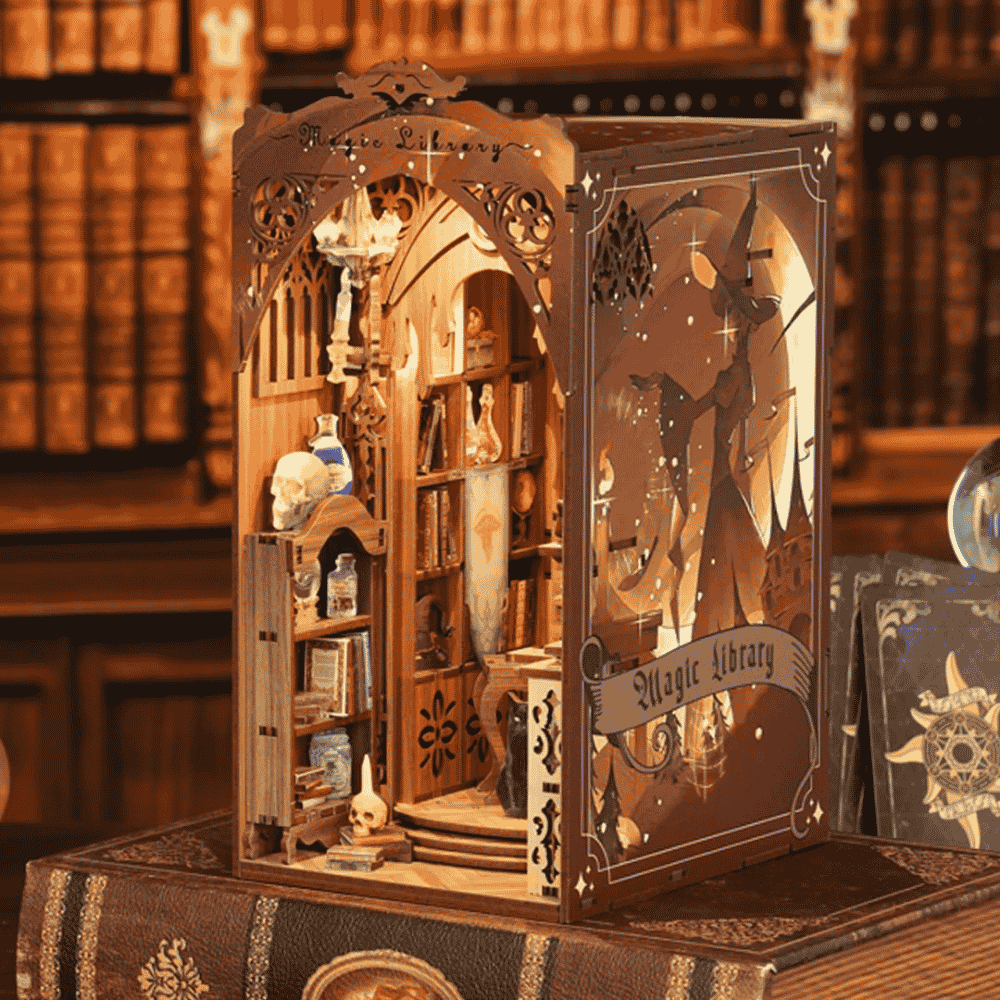
A Gothic arch with laser-cut tracery. A chandelier casting warm gold over grimoires and globes. A black cat at the base of a staircase, watching. A cauldron on the cover something in it, glowing and a witch above it, mid-spell, mid-story, mid-everything.
The Magic Library is already the best room on your shelf. You just have to build it.
Some book nooks are decorative. The Magic Library is architectural.
A full Gothic arch interior stone-effect walls, cathedral tracery, arched doorway receding into the back of the scene. A chandelier hanging from the apex. A writing desk with an open book and a quill. A globe on the shelf. A skull beside the candelabra. And at the floor: the black cat, alert, sitting exactly where it always sits in rooms like this at the threshold between the lit space and whatever's beyond it.
Mixed materials wood, resin, paper, plastic assembled over 2 to 4 days, with a warm golden LED system that lights the cauldron on the cover and the interior simultaneously. The result is the most atmospherically complete book nook in the collection
Multi-material build: the combination of wood, resin accessories, paper elements, and plastic detail pieces makes this the most materially varied kit in the collection and the one that most closely approximates the tactile experience of building a real miniature diorama.

The Gothic library stone walls, pointed arches, candlelight, accumulated books is the spatial archetype of Western occult tradition. It appears in every serious treatment of magic as a place of learning: the alchemist's study, the wizard's tower, the collector's cabinet of curiosities.
It draws from real history. The great monastic libraries of medieval Europe at Cluny, at Monte Cassino, at the British Library's predecessor collections were Gothic in architecture and candlelit by necessity. They held manuscripts that were, to most of the population, as inaccessible as spellbooks written in Latin, locked behind doors that required specific kinds of authorization to open. The knowledge they contained was genuinely dangerous in the wrong hands.
The Victorian occult revival of the 19th century Aleister Crowley, the Golden Dawn, Madame Blavatsky reimagined this spatial tradition for the modern age: the private library as a sacred space, the bookshelf as an altar, the globe and the skull as the twin poles of worldly knowledge and mortality. This room is that tradition, miniaturized and made beautiful.
The cat is not decorative. In European occult tradition, the familiar, particularly the black cat was believed to be a spiritual guardian of sacred spaces, attuned to the magical resonance of the room it inhabited. A library like this without a cat would be unprotected. The cat at the base of the stairs is doing its job.
Building this room means spending two to four days constructing a space that takes that tradition seriously. The Gothic arch goes in first because it went in first in every real library like this. The skull goes in last because that's how it always ends.



A Creative Moment Worth Slowing Down ForReady to step away from the screens and remember what it feels like to make something with your hands? At Ecocraft, we design responsible, thoughtfully crafted DIY kits built for exactly that bringing people together around a shared experience that's equal parts relaxing and rewarding. From realistic scenes to fantastical worlds, each wooden kit invites you to build a unique miniature from scratch, rich in detail and alive with character. Clear instructions and premium sustainable materials mean anyone can dive in, regardless of age or experience. Picture the finished scene: the warm glow of the LED light, the last piece clicking satisfyingly into place, and the quiet pride of having built something beautiful together.

You've always dreamed of a little magic on your bookshelf and you never have to leave your living room to find it. A book nook pulls you into a miniature world where every carefully placed detail tells its own story. Build it piece by piece at your own pace, guided by our illustrated manual, and discover the quiet joy of watching something extraordinary take shape in your hands. Premium sustainable wood, built-in warm LED lighting, and a support team with you at every step mean this kit is made for everyone first-timers very much included. Picture your shelf transformed: soft golden light, delicate textures, and that deep, unhurried smile of someone who just made something they're genuinely proud of. With Wood-miniatures, it's never just a decorative object. It's a moment you'll remember.


