


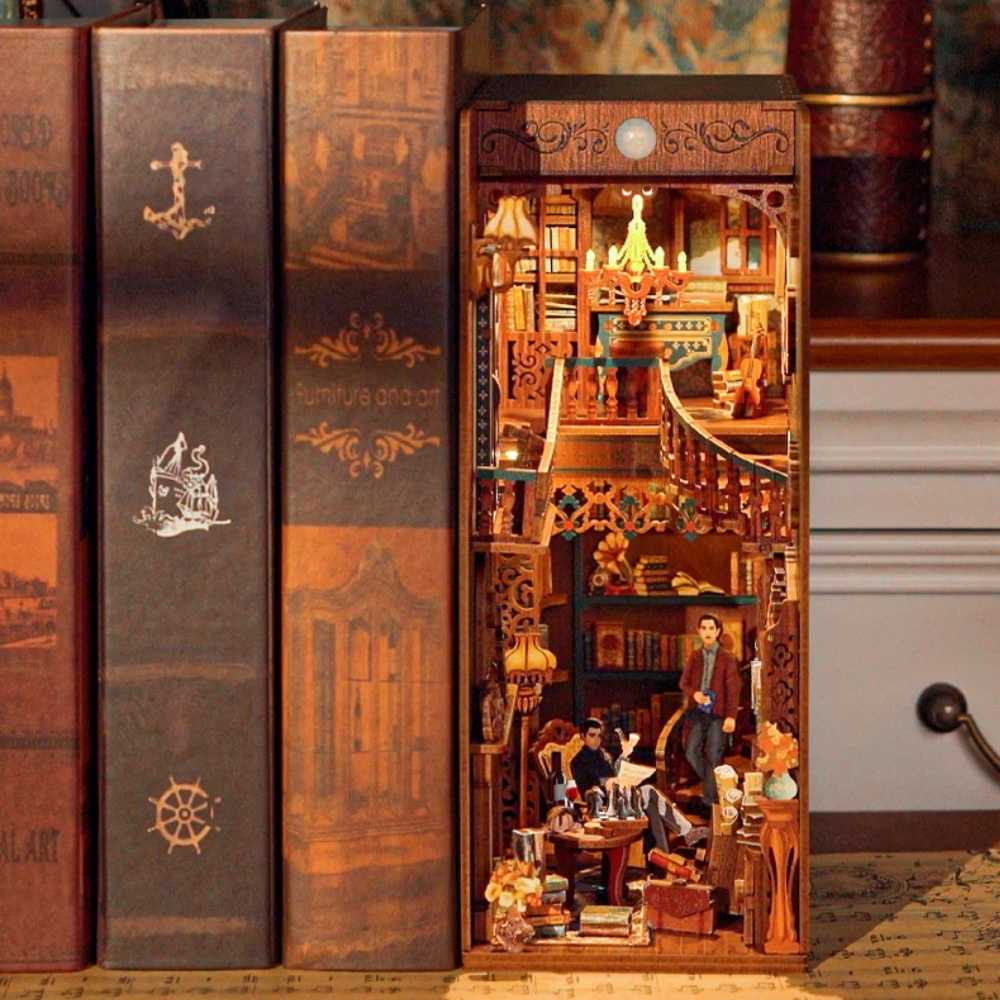

A Creative Moment Worth Slowing Down ForReady to step away from the screens and remember what it feels like to make something with your hands? At Ecocraft, we design responsible, thoughtfully crafted DIY kits built for exactly that bringing people together around a shared experience that's equal parts relaxing and rewarding. From realistic scenes to fantastical worlds, each wooden kit invites you to build a unique miniature from scratch, rich in detail and alive with character. Clear instructions and premium sustainable materials mean anyone can dive in, regardless of age or experience. Picture the finished scene: the warm glow of the LED light, the last piece clicking satisfyingly into place, and the quiet pride of having built something beautiful together.

Once Upon a Shelf…
You've always dreamed of a little magic on your bookshelf and you never have to leave your living room to find it. A book nook pulls you into a miniature world where every carefully placed detail tells its own story. Build it piece by piece at your own pace, guided by our illustrated manual, and discover the quiet joy of watching something extraordinary take shape in your hands. Premium sustainable wood, built-in warm LED lighting, and a support team with you at every step mean this kit is made for everyone first-timers very much included. Picture your shelf transformed: soft golden light, delicate textures, and that deep, unhurried smile of someone who just made something they're genuinely proud of. With Wood-miniatures, it's never just a decorative object. It's a moment you'll remember.
You may also like
-
Beauty and the Beast Book Nook
Regular price $114.90Regular price -
Book Nook Detective Agency : Violin
Regular price $154.90Regular price -
Magic Potion House Book Nook
Regular price $84.90Regular price -
Book nook fantasy store
Regular price $89.90Regular price$99.90Sale price $89.90Sale


